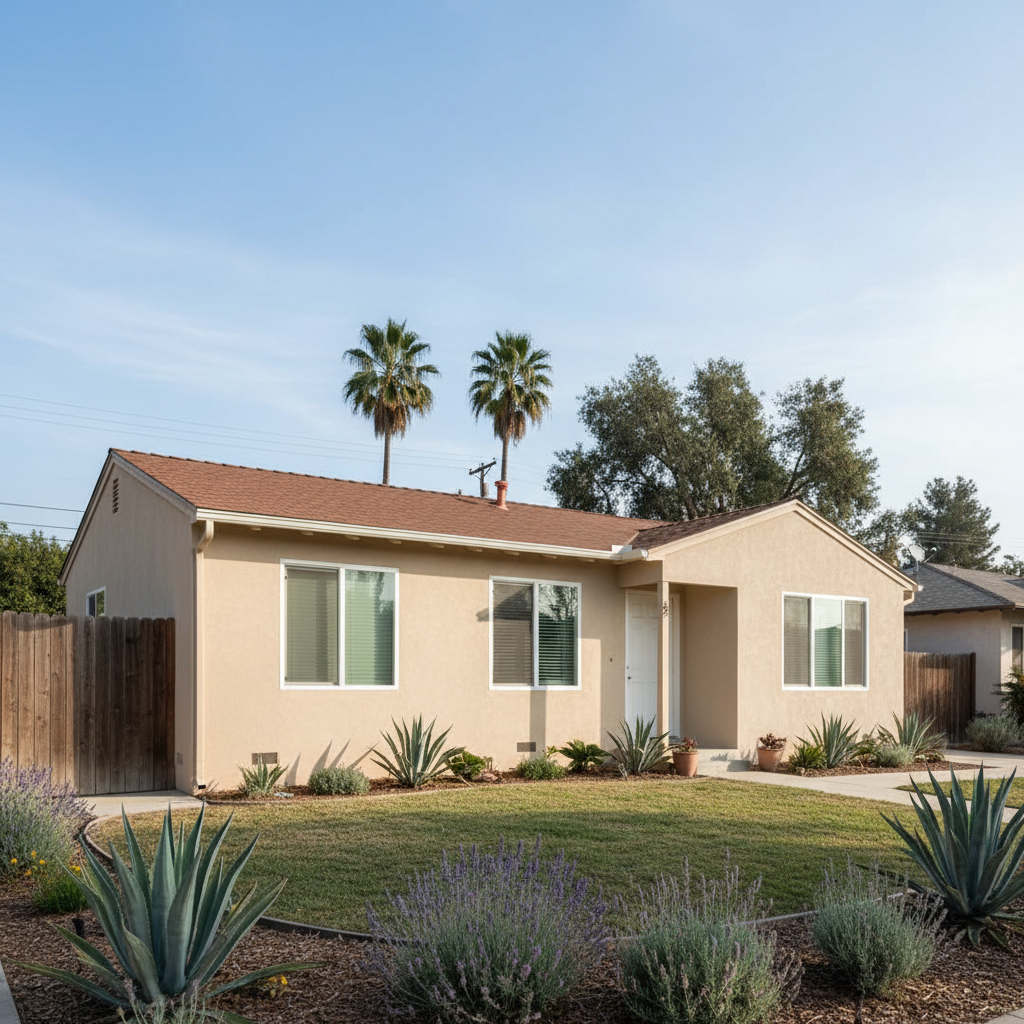
If your exterior walls are looking faded or chalky, you are probably wondering what it will cost to get things refreshed. Stucco is everywhere here in Sunnyvale, from the mid-century ranch homes in Ponderosa to newer builds closer to El Camino Real, and keeping stucco painted is important for weather protection.
Most homeowners around here pay between $3,500 and $7,500 for a complete professional exterior paint job on a standard single-story or two-story home. Broken down by square footage, you are generally looking at $2.50 to $5.50 per square foot for labor and materials combined. Of course, that is just a baseline. Sunnyvale Stucco Co sees a few distinct variables that push those numbers up or down.
What Drives the Cost Up?
The condition of your walls is the biggest price driver. If you have hairline cracks, flaking paint from a previous bad coat, or patches that have not been touched in fifteen years, prep work takes up a massive chunk of the labor.
- Surface repairs: Patching cracks and sealing gaps before a drop of paint goes on.
- Height and access: Two-story homes or tight side yards near property lines require extra safety setup and ladders.
- Paint selection: Standard 100 percent acrylic paints are affordable and breathable, while thick elastomeric coatings cost more upfront because they bridge minor cracks and move with our local temperature swings.
- Trim and details: Extensive eaves, window pop-outs, and multi-color schemes add hours of hand-brushing time.
What Should Be Included in a Proper Quote?
A professional estimate should not just be a single lump sum scribbled on the back of a business card. When you review a quote for your Sunnyvale home, make sure it explicitly spells out power washing to clear away dust and cobwebs, hand-scraping of any loose material, and priming of bare patches or repaired spots. It should also specify the exact brand and grade of paint being used, along with a firm commitment to a standard two-coat application. Masking off your windows, concrete walkways, and landscaping plants takes serious time, and that protection needs to be part of the package.
How to Avoid Overpaying
Getting multiple bids is a given, but do not just automatically pick the cheapest contractor. Low-ball bids usually mean they are cutting corners on prep work, skipping the primer, or using cheap builder-grade paint that will start chalking under the California sun in a couple of years. Ask contractors how they handle masonry priming and whether their coating is rated for local climate conditions. A mid-range bid from a reputable local crew that communicates clearly will almost always save you money over a cheap redo down the road.