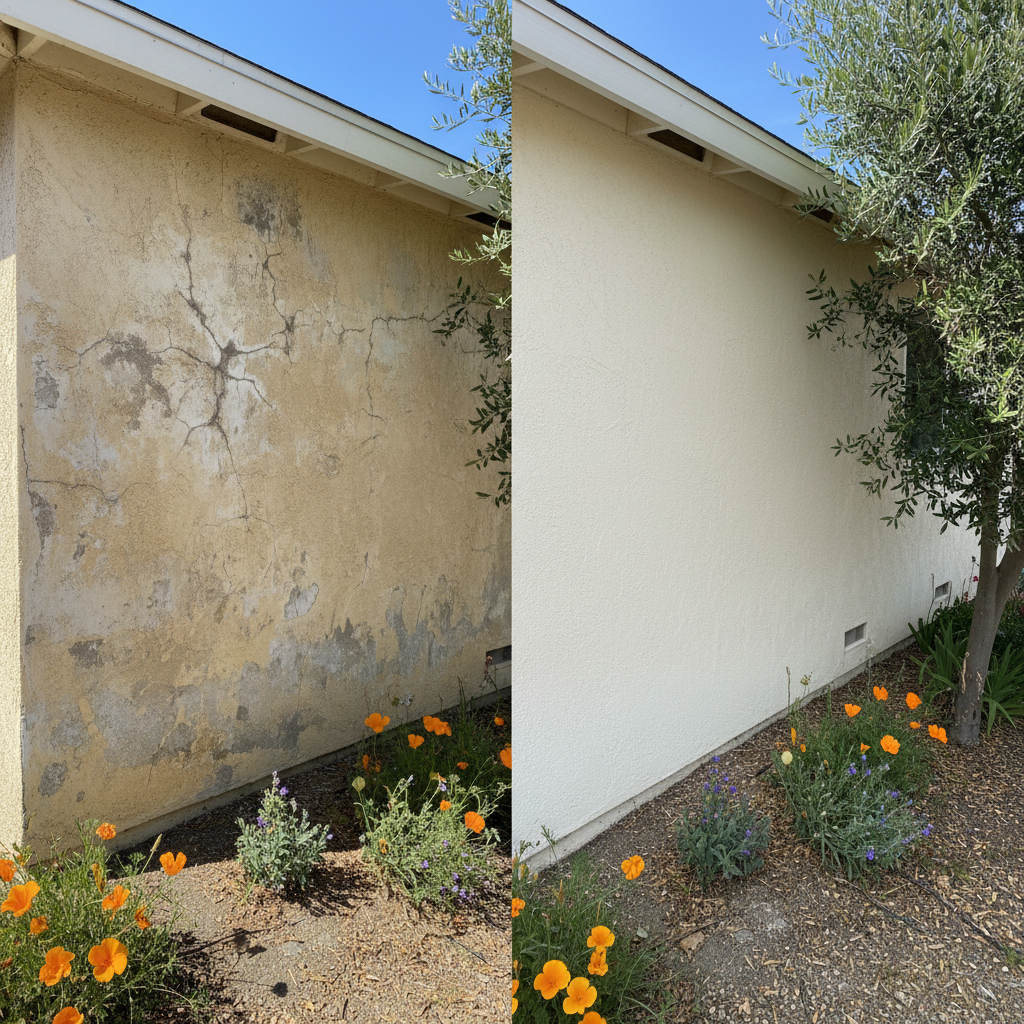
You've noticed cracks, maybe some chipping, or even a soft spot on your stucco. Now you're wondering, "Do I just patch this thing up, or do I need to go all out and re-stucco the whole wall or even the house?" It's a common question I get from folks all over Sunnyvale, from the older homes in the Heritage District to the newer builds near Moffett Park. There's no single right answer for everyone, of course, but I can tell you what I've seen work best in our climate and with our local building styles.
Stucco Patching: The Quick Fix
Patching is exactly what it sounds like: you're fixing just the damaged area. We chip out the loose stuff, prep the surface, and then apply new stucco to blend it in. It's often the first thing people think of because it seems like the easiest and cheapest option. And sometimes, it really is.
When Patching Makes Sense:
- Small, isolated cracks or holes: If you've got a single hairline crack or a small ding from a stray baseball, a patch is probably all you need.
- Newer stucco with minor damage: If your stucco is relatively new (say, less than 10-15 years old) and the damage isn't widespread, patching can extend its life and keep it looking good.
- Budget constraints for minor issues: If you're on a tight budget and the damage is purely cosmetic or very minor structurally, a patch can buy you some time.
The Downsides of Patching:
- Color matching: This is the big one. Even if we use the exact same mix and color, new stucco will almost always look different from old, weathered stucco. The sun, rain, and even air pollution in Sunnyvale change the color and texture of stucco over time. You'll often see a "patchwork quilt" effect, especially on older homes.
- Durability: A patch is only as good as the surrounding stucco. If the underlying issue (like water intrusion or structural movement) isn't addressed, that patch might fail quickly, or new cracks will pop up right next to it.
- Hidden problems: Sometimes, what looks like a small crack is a symptom of a bigger problem, like water damage behind the stucco. A patch just covers it up without fixing the root cause, which can lead to bigger headaches down the road.
Re-Stuccoing: The Full Overhaul
Re-stuccoing, or re-coating, means applying a new layer of stucco over an existing wall or your entire house. This isn't just a cosmetic fix; it's a significant upgrade to your home's exterior.
When Re-Stuccoing is the Smart Move:
- Widespread cracking or delamination: If you've got cracks spider-webbing across large sections of your walls, or if the stucco is peeling away in multiple spots, patching becomes a losing battle.
- Significant water damage: If you've had water intrusion issues, especially common with older stucco systems that weren't built with modern drainage planes, re-stuccoing allows us to strip it back, fix the sheathing, address flashing issues, and install a proper weather-resistive barrier. This is crucial for preventing mold and rot, which we see a lot of in homes that weren't properly sealed against our wet winters.
- Outdated or mismatched appearance: Maybe your stucco is just plain ugly, or you've had so many patches over the years that your house looks like a checkerboard. Re-stuccoing gives you a fresh, uniform look and can dramatically boost your curb appeal.
- Energy efficiency upgrade: A new stucco system, especially if we add an insulation layer, can improve your home's thermal performance.
- Long-term investment: A properly applied re-stucco job can last for decades, often 30-50 years, with minimal maintenance.
The Downsides of Re-Stuccoing:
- Cost: There's no getting around it; re-stuccoing is a bigger investment upfront than patching. It involves more materials, more labor, and more time.
- Disruption: It's a bigger project, meaning more scaffolding, more noise, and more time for our crew to be working around your property.
My Recommendation for Sunnyvale Homeowners
Look, if you've got one or two small, isolated cracks on relatively new stucco, a patch is probably fine. We do them all the time at Sunnyvale Stucco Co. But if your stucco is showing widespread signs of age, cracking, or especially if you suspect water intrusion, don't just patch it. You'll be throwing good money after bad.
For most homes in Sunnyvale that are 20+ years old and showing noticeable wear and tear, I'm almost always going to recommend a full re-stucco. Why? Because our climate, with its dry summers and wet winters, puts a lot of stress on stucco. The ground movement we sometimes get, even minor stuff, can cause cracks. Patching just doesn't address the systemic issues that develop over time.
A full re-stucco gives you a fresh start. It's an opportunity to fix any underlying problems, upgrade your home's weatherproofing, and give it a beautiful, uniform look that will last for decades. It's a bigger investment, yes, but it's an investment that pays off in durability and increased home value. Don't just cover up the problem; fix it right.